

 Retail Packaging
 What Is Shelf Ready Packaging?
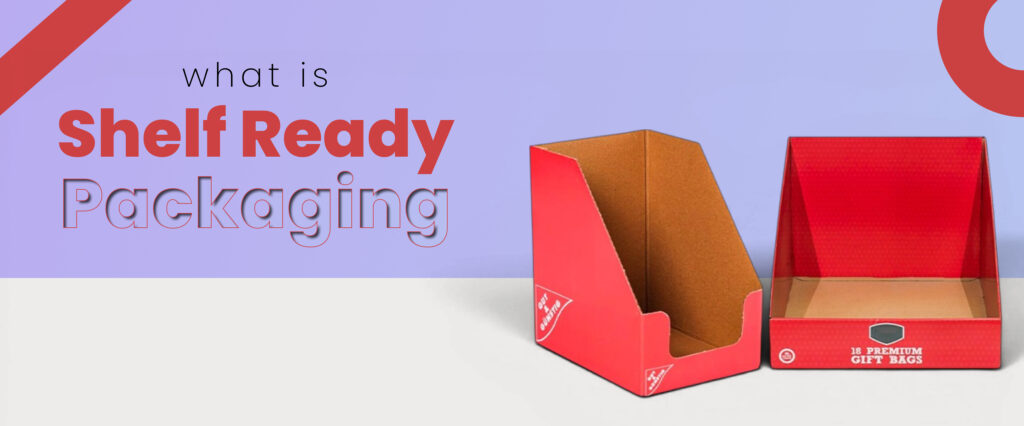
Shelf ready packaging (SRP) is secondary packaging that is designed to move products from shipping cartons to store shelves with minimal handling. Its open style allows it to restock the products easily while keeping shelves visually appealing.
Shelf ready packaging is mostly used in retail stores as it improves product visibility and reduces stocking time. This guide will explain retail and shelf ready packaging, its types, and why it becomes an important part of modern retail packaging.
Shelf Ready Packaging Definition
Shelf ready packaging is a type of secondary packaging that allows products to be placed on retail shelves. It is also known as retail ready packaging (RRP). Despite individual unpacking, the product is directly kept on shelves and speeds up restocking. Most of the time, shelf ready packaging uses custom retail display boxes to make products more visible and keep shelf displays neat and attractive.
Why Is Custom Shelf Ready Packaging Important?
Custom shelf ready packaging is designed to meet the product size and branding while making it easy to stock. It helps businesses to present their product more precisely and create a consistent shopping experience.
In addition to improving product presentation, custom shelf ready packaging reduces the handling time and ensures shelves remain organized.
Why Do Retailers Demand Shelf Ready Display Packaging?
Retailers demand shelf ready packaging (SRP) because it improves store operations. Furthermore, it also enhances product visibility. Other than that they also offers several other advantages like:
- Reduce labor costs
- Decrease shelf restocking time
- Organized shelf display
- Better customer shopping experience
- Increase sales velocity
How Does Shelf Ready Packaging Work?
Businesses love shelf-ready packaging because it allows products to move directly from cartons to shelves. During shipping, it protects the product from damage. As soon as the product reaches the retail shop, the staff quickly remove the perforated top or front panel for quick product display.
After removal, the remaining package is ready to display and can be displayed directly on shelves. By combining shipping, storage, and presentation in one package shelf ready packaging helps retailers to save time and improve product visibility.
Materials Used in Shelf Ready Packaging
Shelf ready packaging is commonly made from corrugated fiberboard and paperboard. These materials provide strength and durability. The selection of material depends on product weight and shipping requirements. Corrugated shelf ready packaging is most preferred as an industrial standard.
Different materials come with different thicknesses, and that is why the dimensions of a box can vary. If you want to learn how to measure a box, then we have an expertly written blog post for you. You can also check it out.
Types Of Shelf-Ready Packaging
Shelf ready packaging is available in different packages for various products and display requirements. The following are the common types of shelf ready packaging.
Tray Style Shelf-Ready Packaging
Tray style packaging is a sturdy and open-top corrugated tray that can hold multiple products securely. These are widely used as shelf ready food packaging and are best for snack products, canned products, and health supplements.
Display Ready Boxes
These are fully enclosed boxes with perforated front panels. The front panel folds down after opening to make the product easy to see. Display ready boxes are mostly used for cosmetics and small electronics.
Foldable Shelf Ready Packaging
Foldable shelf ready packages are designed to fold flat during shipping. On arrival, it assembles into a sturdy unit with a back header that stands upright for extra branding. These are used for consumer goods and seasonal promotions.
Blister Packs With Display Cards
In blister packs with display cards, items are packed in clear plastic with printed cardboard cards with hang holes for easy hanging placements. They are used for toys and accessories.
Custom Shelf-Ready Packaging
Custom shelf ready packaging is made with special dimensions and a unique style according to business requirements or customer needs. It is best for irregularly shaped products and high-volume brands.
Benefits of Shelf Ready Packaging
Shelf ready packaging solutions give benefits to both retailers and brands by enhancing product handling and store operations. Some of them are:
- Faster shelf restocking
- Reduced labor costs
- Enhance product visibility
- Improved brand presentation
- Protect the product during transport
- Organized shelf displays
- Minimize packaging waste
- Improved customer shopping experience
Shelf-Ready Packaging Examples from Famous Brands
Many famous brands use shelf ready packaging to improve product visibility because it helps them to increase customer trust. Here are well-known examples:
Coca-cola
Coca-Cola uses tray-style shelf ready packaging to display bottles and cans on retail countertops. They do this because the bold Coca-Cola logo is visible from a distance. This makes the brand’s presentation more visible.
Nestle
Nestle uses custom display boxes with perforated panels for chocolates and snacks like Kitkat. Colourful packaging makes it eye-catching, which increases the buy rate.
Unilever
Unilever mostly uses every type of shelf ready packaging according to the requirements, such as a perforated display carton for Dove.
Shelf-Ready Packaging Vs. Retail Ready Packaging
Shelf ready packaging and retail ready packaging are closely related but have some different purposes.
| Features | Shelf ready packaging | Retail ready packaging |
| Purpose | Made for direct placement on shelves | Designed to improve handling and brand representation |
| Category | Specific type of retail ready packaging | Broader category including shelf ready packaging and customer counter display boxes |
| Display | On retail shelves | On shelves, counters and promotional areas |
| Common uses | In retail stores | Supermarkets and promotional areas |
How Shelf Ready Packaging Differs from Traditional Packaging?
Traditional packaging mainly focuses on product protection during shipping and storage, while shelf ready packaging focuses on both shipping and storage, but in addition, it’s primarily focused on direct retail shelves.
Traditional packaging requires products to be unpacked to be displayed on shelves, while shelf ready packaging can be directly displayed on shelves after transit. Many shelf ready packaging manufacturers offer packaging solutions for a variety of products. Custom countertop display boxes are one of the ways to promote products at sales locations.
Conclusion
Shelf-ready packaging is used to display products on retail shelves. You can use it for marketing, protection, and storage purposes. It helps you attract customers.
Are you looking for retail packaging experts? Then contact Luca Packaging today and make your brand famous.
FAQ’s
What Does Shelf-Ready Packaging Mean?
Shelf-ready packaging means moving products directly from cartons to shelves.
What Is An Example Of Shelf Ready Packaging?
Cereal boxes are displayed in perforated cardboard trays which can be placed directly on supermarket shelves without unpacking each box individually.
Does shelf ready packaging increase product sales?
Yes, shelf-ready packaging helps you make your products easy to notice and provides great convenience for customers.
How Do You Choose the Right Shelf Ready Packaging Suppliers?
You can choose shelf-ready packaging suppliers that offer durable materials, customizable packaging solutions, and packaging solutions that meet your product and retail display needs.